
Morocco Desert Tour Packing List
Pack light layers, a scarf, closed shoes and a small bag for one night in the dunes: that covers 90% of what you need for a Sahara tour from Fes, Marrakech or Merzouga.
What to wear in the Sahara
The desert swings from hot afternoons to cold nights, so dress in layers you can add and remove. Choose loose, light-colored cotton or linen over tight synthetics: it keeps the sun off your skin and lets air move.
| Moment | What to wear | Why |
| Daytime drive (Atlas, gorges, kasbahs) | Light long pants or a long skirt, breathable t-shirt, light overshirt | Sun through the car window is strong, and shoulders and knees covered is respectful in villages |
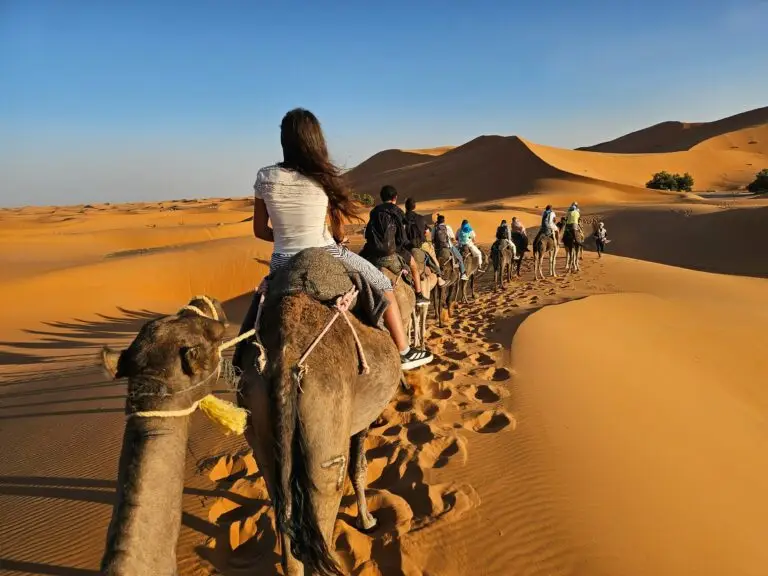
| Camel ride at sunset | Long loose pants, closed shoes, scarf or hat | Long pants stop saddle rubbing; a scarf blocks wind and sand |
| Evening and night at camp | Fleece or warm sweater, long pants, socks, a light jacket | Temperatures drop fast after sunset, even in warm months |
| Sunrise on the dunes | Your warmest layer, plus a beanie in winter | It is often the coldest hour of the whole trip |
| Cities (Fes, Marrakech) | Shoulders and knees covered, comfortable walking shoes | Medinas are conservative and the streets are uneven |
The one item worth buying before you go: a long cotton scarf or shesh (turban-style cloth). It works as a sun shield, a sand mask, a neck warmer and a pillow cover. It costs a few dirhams in any souk and is easy to wrap with a quick video tutorial.
What to pack by season
The Sahara has no bad season, but each one asks for a different bag. Temperatures below are approximate ranges around Merzouga; check the forecast a few days before you travel.
| Season | Typical weather | Add to your bag |
| Winter (Dec–Feb) | Mild days, nights near freezing | Warm jacket, hat, gloves, thermal base layer, extra socks |
| Spring (Mar–May) | Warm days, cool nights | Fleece, light jacket, sunglasses, sunscreen |
| Summer (Jun–Aug) | Very hot days, warm nights | Wide-brim hat, 2 liters of water per person per day, electrolyte sachets, light long sleeves |
| Autumn (Sep–Nov) | Hot to warm days, cool nights | Fleece, light jacket, sunscreen, scarf |
If you travel between November and February, treat the nights as cold and pack for them. A thin jacket that felt fine in Marrakech is not enough at a desert camp at 5 a.m.
Footwear, sun and sand protection
Shoes. Bring closed, comfortable shoes with a flat sole: trail runners or light sneakers work well for the dunes, kasbahs and gorges. Sand gets into sandals and flip-flops, and the ground near camps can be rocky. Keep sandals for the camp itself, where you will want to air your feet.
Sun. Pack sunglasses with UV protection, SPF 30+ sunscreen, SPF lip balm and a hat or scarf. Reapply at midday, and don’t forget the back of your neck and the tops of your feet.
Sand and wind. A scarf over your nose and mouth is enough on a breezy day. If you wear contact lenses, bring glasses as a backup, because fine dust dries lenses out. Carry a zip bag for your phone and camera, and a lens cloth.
Skin and hair. Desert air is dry. A rich moisturizer and a small bottle of saline spray for your nose make the second day much more comfortable.
What to bring for the camp night
On most Merzouga tours you sleep one night in a desert camp, and you reach it by camel or 4×4. Pack a small daypack for that night and leave the rest of your luggage in the vehicle.
In your daypack
- One change of clothes and warm layers for the night
- Headlamp or small flashlight (camps are dark and the stars are the point)
- Water bottle, plus snacks or dates for energy
- Hand sanitizer
- Phone, camera, and a power bank (camps have limited charging)
- Cash in small dirham notes for tips and souvenirs
- Any personal medication, plus motion-sickness tablets for the long mountain roads
In your main luggage (stays in the vehicle)
- Clean clothes for the cities
- Chargers, adapters and electronics you don’t need at camp
- Passport copies and travel documents
Morocco uses type C and E sockets at 220 V, so most European plugs fit. Travelers from the US, UK and elsewhere should bring an adapter.
What to leave at home
- Big hard suitcases for the camp night. They are awkward on a camel and in a tent. A soft bag is easier to handle.
- Revealing or very tight clothing. It is uncomfortable in the heat and out of place in villages and medinas.
- Heavy jeans. They are hot by day and slow to dry. Light travel pants are better.
- Valuable jewelry and expensive watches. There is nowhere to lock them at camp, and sand is hard on them.
- Too many electronics. One phone, one camera and a power bank are plenty. Sand and electronics don’t get along.
- Single-use plastic. Bring a refillable bottle and buy large water bottles in town.
Sahara packing checklist
Copy this into your notes app and tick items off as you pack.
- ☐ Passport and printed booking confirmation
- ☐ Dirhams in small notes
- ☐ 2–3 light long-sleeve tops
- ☐ Light long pants or skirt
- ☐ Warm fleece or sweater
- ☐ Light jacket (warm jacket and hat in winter)
- ☐ Cotton scarf or shesh
- ☐ Closed walking shoes and socks
- ☐ Sandals for camp
- ☐ Sunglasses, sunscreen, lip balm, hat
- ☐ Headlamp or flashlight
- ☐ Reusable water bottle
- ☐ Power bank and plug adapter
- ☐ Personal medication and motion-sickness tablets
- ☐ Hand sanitizer
- ☐ Small daypack for the camp night
- ☐ Zip bags for phone and camera
Packing FAQ
Do I need a sleeping bag? Desert camps normally provide beds and blankets. In December and January, ask your tour company about extra blankets and still bring warm sleepwear.
Can I wear shorts in the Sahara? On the dunes in warm months, yes. In villages, souks and medinas, cover your knees and shoulders. Light long pants are the safest choice for the whole trip.
Will I have a shower and charging at camp? It depends on the camp. Standard camps have shared, basic facilities, and some luxury camps offer private tents with a shower. Bring a power bank either way.
How much cash should I carry? Bring small dirham notes for tips, drinks, snacks and souvenirs. ATMs exist in Merzouga and the larger towns on the route, but not at the camp.
What if I forget something? Most of the list is easy to buy on the way. Scarves, sunscreen and water are sold in Fes, Marrakech and Merzouga, so don’t stress over a missing item.
Ready to go? Our Sahara tours
Sahara Desert Crew was founded by Youssef Yaakoubi, who comes from a family of desert nomads. We run private and small-group trips across Morocco, with camel trekking, desert camps, 4×4 and quad adventures, and local guides who know the dunes. Pick the route that fits where you start and where you want to finish.
| Tour | Route | What you get |
| 3-Day Fes to Marrakech Sahara Tour | Fes → Merzouga → Marrakech | Cedar forests of Ifrane and Azrou, the Atlas Mountains, camel ride and a night in a desert camp, then Todra Gorges, Ait Benhaddou and the High Atlas back to Marrakech |
| 4-Day Fes to Marrakech Sahara Tour | Fes → Merzouga → Marrakech | The same journey at a slower pace, through the Ziz Valley and Atlas Mountains, with more time among the Merzouga dunes |
| 3-Day Marrakech to Merzouga Sahara Tour | Marrakech → Merzouga → Marrakech | The fastest way into the Sahara from Marrakech: High Atlas passes, kasbahs, a camel trek and a night under the stars |
| 5-Day Marrakech to Merzouga Sahara Tour | Marrakech → Merzouga → Marrakech | Marrakech culture combined with the Merzouga dunes, with extra time for the valleys and gorges on the way |
Not sure which one suits you? Tell us your dates, your group size and whether you prefer a private or small-group trip, and we will help you choose. We can also build a tailor-made itinerary.
Start your Sahara adventure: visit sahara-desert-crew.com to see current dates and prices, or send us a message with your questions. Pack light, bring a scarf, and we will take care of the dunes.