
Moroccan Tagine: History, Spices, Authentic Recipes and How to Cook It at Home
A Moroccan tagine is a slow-cooked stew of tender meat, fish or vegetables, simmered with fragrant spices, dried fruit, olives and preserved lemons until the sauce is rich and the ingredients melt in your mouth. It is Morocco’s most famous dish, served in family homes, riads and restaurants from Marrakech to the Sahara. In this complete guide you will learn what a tagine is, where it comes from, how to use a tagine pot, the spices that give it its flavour, and five authentic tagine recipes you can cook at home.
What Is a Moroccan Tagine?
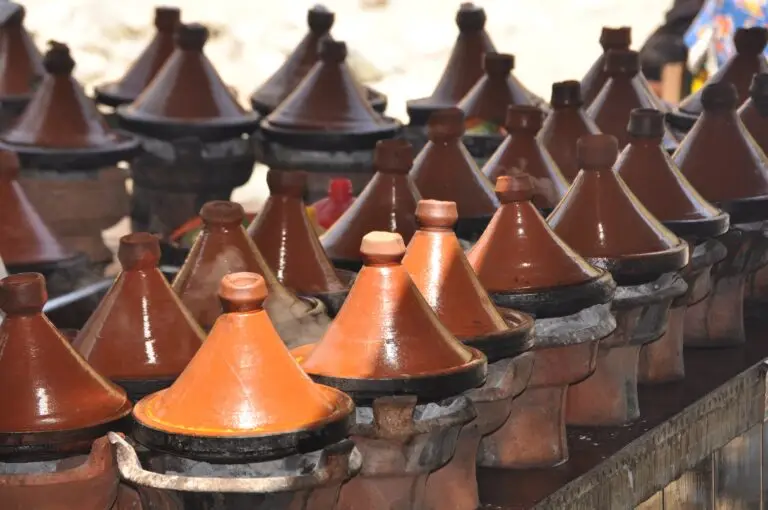
“Tagine” (also spelled tajine) names two things at once: the dish and the pot it is cooked in. The pot has a wide, shallow base and a tall cone-shaped lid. As the food simmers, steam rises into the cone, cools, and drips back down onto the stew. This keeps the meat juicy and the flavours concentrated with very little added liquid.
A Moroccan tagine is not one recipe but a family of dishes. Chicken with preserved lemon and olives, lamb with prunes and almonds, meatballs with eggs, vegetables with chickpeas and fish with chermoula are all tagines. What they share is slow, gentle cooking, a balance of savoury and sweet, and the warm spices of Moroccan cuisine.
History and Origins of the Tagine
The Moroccan tagine is closely tied to the Amazigh (Berber) people of North Africa, who cooked slow stews in clay vessels over small charcoal fires. The clay pot suited nomadic and mountain life: it used little water and little fuel, and it turned tough cuts of meat into tender food. Some linguists link the word itself to an ancient word for a shallow cooking pan, though its exact origin is debated.
Over the centuries the dish absorbed outside influences. Arab cooks brought spices and the habit of mixing meat with fruit, Andalusian settlers added refined, sweet-and-savoury combinations, and Mediterranean ingredients such as olives and preserved lemons became signature flavours. Today each region has its own style, from the saffron-rich tagines of Fès to the simple, rustic versions cooked in the Atlas Mountains and the desert.
The Tagine Pot: Clay vs Cast Iron and How to Use It
Traditional clay tagine. Unglazed or lightly glazed clay gives the most authentic flavour and gentle heat. Clay pots must be seasoned before first use: soak the base and lid in water for about 2 hours, dry them, rub the inside with olive oil, then heat slowly in an oven at about 150°C (300°F) for around 2 hours. Always use low heat, a heat diffuser on gas or electric hobs, and never put a cold pot on a hot burner. Decorated, glazed pots sold as souvenirs are usually for serving only, so check before cooking in one.
Cast-iron tagine. Enamelled cast-iron tagines work on any hob (including induction), need no seasoning and resist cracking. They are the easiest choice for beginners.
No tagine pot? A heavy Dutch oven or casserole dish with a tight lid works well. Cook on low heat, and add a little extra liquid because less steam circulates than in a cone-shaped lid.
Essential Moroccan Tagine Spices and Ingredients
A handful of ingredients create the classic tagine flavour. Stock these and you can cook almost any recipe below.
| Ingredient | What it adds | Used in |
| Ras el hanout | Warm, complex spice blend, often with 10 or more spices | Lamb, chicken, vegetable tagines |
| Ground ginger | Warm, peppery heat | Almost every tagine |
| Turmeric | Earthy flavour and golden colour | Chicken, vegetable tagines |
| Cumin | Smoky, earthy depth | Kefta, fish, vegetable tagines |
| Paprika | Mild sweetness and colour | Kefta, fish tagines |
| Cinnamon | Gentle sweetness | Lamb and prune tagines |
| Saffron | Fragrant, luxurious flavour and colour | Chicken, lamb tagines |
| Preserved lemon | Salty, bright citrus | Chicken, fish tagines |
| Green and violet olives | Briny richness | Chicken tagine |
| Prunes, apricots, raisins | Sweetness to balance the spices | Lamb tagine |
| Fresh coriander and parsley | Freshness at the end | All tagines |
Tip: buy whole spices when you can and grind them fresh. Preserved lemons are sold in jars in many supermarkets, and the rind is the part you use.
Recipe 1: Chicken Tagine with Preserved Lemon and Olives
The most popular tagine in the world. Serves 4 to 6. Prep 20 minutes, cook about 1 hour 15 minutes.
Ingredients
- 1.2 kg chicken thighs and drumsticks, skin on
- 2 onions, finely grated or chopped
- 4 garlic cloves, minced
- 3 tablespoons olive oil
- 1 teaspoon ground ginger
- 1 teaspoon ground turmeric
- 1 teaspoon ground cumin
- 1 teaspoon black pepper
- 1 pinch saffron threads, soaked in 2 tablespoons warm water
- 1 cinnamon stick
- 1 preserved lemon, rind sliced (discard the pulp)
- 150 g green olives
- 250 ml water or chicken stock
- A handful of chopped fresh coriander and parsley
- Salt to taste
Method
- Mix the chicken with the onions, garlic, olive oil, ginger, turmeric, cumin, pepper, saffron and a little salt. Marinate for at least 30 minutes, or overnight in the fridge.
- Place the chicken and all the marinade in the tagine, add the cinnamon stick and the water, and cover.
- Cook over low heat for 50 to 60 minutes, turning the chicken once, until it is very tender and the sauce has thickened.
- Add the preserved lemon rind and olives for the last 15 minutes.
- Sprinkle with fresh herbs and serve straight from the pot with crusty bread.
Recipe 2: Lamb Tagine with Prunes and Almonds
A sweet-and-savoury classic for celebrations. Serves 4 to 6. Prep 20 minutes, cook about 2 hours.
Ingredients
- 1 kg lamb shoulder, cut into large chunks
- 2 onions, grated
- 3 tablespoons olive oil or smen (Moroccan preserved butter)
- 1 teaspoon ground ginger
- 1 teaspoon ground cinnamon, plus 1 cinnamon stick
- 1 teaspoon ras el hanout
- 1 pinch saffron threads
- 400 ml water
- 250 g pitted prunes
- 2 tablespoons honey
- 100 g blanched almonds, toasted
- 1 tablespoon sesame seeds
- Salt and pepper
Method
- Combine the lamb, onions, oil, ginger, ground cinnamon, ras el hanout, saffron, salt and pepper in the tagine. Add the cinnamon stick and the water.
- Cover and cook over low heat for about 1 hour 30 minutes, until the lamb is tender and almost falling apart.
- Add the prunes and honey and simmer uncovered for 15 to 20 minutes, until the sauce is thick and glossy.
- Top with toasted almonds and sesame seeds. Serve hot with bread or couscous.
Recipe 3: Kefta Tagine with Eggs (Moroccan Meatball Tagine)
A quick, budget-friendly family favourite. Serves 4. Prep 20 minutes, cook about 35 minutes.
Ingredients
- 500 g minced beef or lamb
- 1 small onion, grated
- 3 tablespoons chopped fresh parsley and coriander
- 1 teaspoon cumin
- 1 teaspoon paprika
- 1/2 teaspoon cinnamon
- Salt and pepper
- 2 tablespoons olive oil
- 1 onion, sliced
- 4 ripe tomatoes, grated, or 1 can (400 g) chopped tomatoes
- 2 garlic cloves, minced
- 1 teaspoon ground cumin and 1 teaspoon paprika for the sauce
- 4 eggs
Method
- Mix the mince with the grated onion, herbs, cumin, paprika, cinnamon, salt and pepper. Shape into walnut-sized meatballs.
- Heat the olive oil in the tagine, soften the sliced onion and garlic, then add the tomatoes and sauce spices. Simmer for 10 minutes.
- Place the meatballs in the sauce, cover and cook on low heat for 15 minutes.
- Crack the eggs over the top, cover again, and cook for 5 to 7 minutes until the whites are set.
- Serve immediately with bread for scooping.
Recipe 4: Moroccan Vegetable Tagine (Vegan)
A colourful, hearty tagine that suits vegetarians and vegans. Serves 4 to 6. Prep 25 minutes, cook about 45 minutes.
Ingredients
- 3 tablespoons olive oil
- 1 large onion, sliced
- 3 garlic cloves, minced
- 2 carrots, cut into chunks
- 2 potatoes, cut into chunks
- 1 sweet potato or pumpkin wedge, cubed
- 2 courgettes (zucchini), sliced thickly
- 1 red pepper, sliced
- 400 g chopped tomatoes
- 1 can (400 g) chickpeas, drained
- 1 teaspoon each ground ginger, turmeric, cumin and paprika
- 1/2 teaspoon cinnamon
- 50 g raisins or dried apricots
- 200 ml vegetable stock
- Fresh coriander, salt and pepper
Method
- Heat the oil in the tagine and soften the onion and garlic for 5 minutes.
- Stir in all the spices for 1 minute until fragrant.
- Add the carrots, potatoes, sweet potato, tomatoes and stock. Cover and cook on low heat for 20 minutes.
- Add the courgettes, pepper, chickpeas and dried fruit. Cover and cook for another 15 to 20 minutes until the vegetables are tender.
- Finish with fresh coriander and serve with couscous.
Recipe 5: Fish Tagine with Chermoula
A fresh, tangy tagine popular on the Atlantic coast, in Essaouira and Safi. Serves 4. Prep 20 minutes plus 30 minutes marinating, cook about 25 minutes.
Chermoula marinade
- 1 small bunch fresh coriander and 1 small bunch parsley, finely chopped
- 4 garlic cloves, minced
- 1 teaspoon cumin
- 1 teaspoon paprika
- Juice of 1 lemon
- 4 tablespoons olive oil
- Salt and a pinch of cayenne or chilli
Other ingredients
- 700 g firm white fish fillets (such as hake, cod or sea bream), cut into large pieces
- 2 potatoes, thinly sliced
- 3 tomatoes, sliced
- 1 red pepper, sliced
- A handful of green olives
Method
- Mix the chermoula ingredients. Coat the fish and marinate for 30 minutes.
- Line the base of the tagine with the potato slices and a splash of oil, then layer the pepper and tomato slices on top.
- Cover and cook on low heat for 15 minutes, until the potatoes begin to soften.
- Place the fish on top with all the remaining marinade, add the olives, and cover. Cook for 10 to 12 minutes, until the fish flakes easily.
- Serve with lemon wedges and fresh bread.
Tips for a Perfect Tagine (and Mistakes to Avoid)
- Keep the heat low. A tagine should barely bubble. High heat dries out the food and can crack a clay pot.
- Do not lift the lid too often. Steam is what keeps the stew moist.
- Add liquid sparingly. The ingredients release their own juices, so too much water gives a thin sauce.
- Layer smartly. Put onions or potatoes at the bottom to protect the meat from direct heat.
- Use bone-in meat. Thighs, drumsticks, lamb shoulder and shanks give the richest flavour.
- Balance sweet and salty. Dried fruit, honey and preserved lemon are what make a tagine taste Moroccan.
- Finish with fresh herbs. Coriander and parsley lift the whole dish just before serving.
- Make it ahead. Tagine tastes even better the next day, once the spices have settled.
What to Serve with Tagine and How Moroccans Eat It
Tagine is traditionally served from the center of the table in the pot itself, with khobz (round Moroccan bread) used to scoop up meat and sauce. Eating is communal: everyone shares from the same dish, usually using the right hand.
Good side dishes include:
- Couscous, plain or with a little butter and cinnamon
- Moroccan bread (khobz) or flatbread
- A fresh tomato and cucumber salad
- Zaalouk (smoky aubergine and tomato dip)
- Fresh oranges or melon to finish
- A glass of Moroccan mint tea, the classic ending to any meal
Moroccan Tagine FAQ
What is a tagine made of?
The pot is made of clay or cast iron. The dish is made of meat, fish or vegetables slow-cooked with spices, onions, and often dried fruit, olives or preserved lemon.
Can I cook a tagine in the oven?
Yes. A tagine pot with a clay base can go in a cool oven that is then heated, or you can use a Dutch oven. Cook at about 160°C (320°F) for 1.5 to 2 hours, depending on the recipe.
Is tagine spicy?
No. Tagine is aromatic and warmly spiced rather than hot. Chilli is optional and usually served on the side.
How long does tagine take to cook?
Vegetable and fish tagines take 30 to 45 minutes. Chicken takes about an hour, and lamb or beef takes 1.5 to 2 hours.
What is the difference between tagine and couscous?
Tagine is a slow-cooked stew. Couscous is a grain of steamed semolina, often served beside a tagine or topped with a similar stew.
Enjoy Authentic Tagine in Morocco
Cooking the Moroccan tagine at home is rewarding, but tasting one prepared by a Moroccan family, slow-cooked over charcoal in a Berber village or served under the stars in a desert camp, is an experience you will never forget. Sahara Desert Crew can take you there. Their local experts organise private Morocco Sahara tours with camel rides and overnight stays in desert camps, cultural visits to kasbahs and Berber villages, and multi-day journeys from Marrakech, Fes and Casablanca to Merzouga. They also offer day trips, a hot air balloon ride in Marrakech, and private airport and intercity transfers with professional drivers. Visit sahara-desert-crew.com to plan your trip and taste real Moroccan tagine where it belongs.