
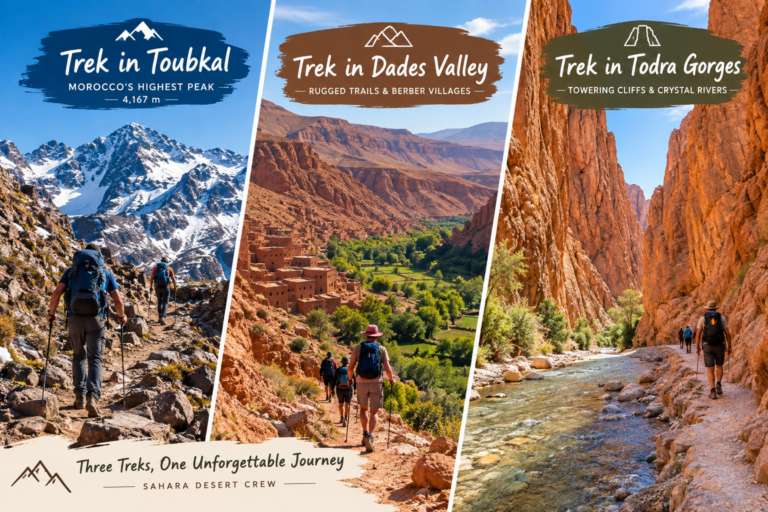
Trekking in Morocco: Discover Toubkal, the Atlas Mountains and Morocco’s Great Gorges
Morocco is famous for its colorful medinas, lively souks, camel rides and golden Sahara dunes. But if you enjoy walking, nature and adventure, there is another side of the country waiting to be discovered.
Trekking in Morocco takes you far beyond the main tourist roads. You can walk through the High Atlas Mountains, challenge yourself on Mount Toubkal, explore the dramatic Dades Gorges or spend a couple of peaceful hours walking beneath the enormous cliffs of the Todgha Gorges.
The best part is that these experiences are very different from one another. Some are challenging mountain adventures, while others are relaxed walks through spectacular landscapes.
Trekking in the Atlas Mountains
The Atlas Mountains are among the best places for trekking in Morocco.
The High Atlas is a landscape of high peaks, deep valleys, terraced fields, walnut trees and traditional Amazigh villages. Walking through this region gives you an opportunity to experience Morocco at a slower pace.
Trekking is not only about reaching a summit. Sometimes the most memorable moments happen while walking between villages, meeting local people or stopping for a glass of Moroccan mint tea.
Depending on the area and season, trails can take you through green valleys, rocky mountain paths and high passes with impressive views.
For travelers coming from Marrakech, the Atlas Mountains also offer a wonderful contrast to the city’s busy streets. Within a relatively short distance, the scenery changes dramatically from urban life to quiet mountain villages.
Mount Toubkal: A 2 to 3-Day Trek
For those looking for a more challenging Morocco trekking experience, Mount Toubkal is one of the country’s most famous destinations.
At approximately 4,167 meters, Mount Toubkal is the highest mountain in Morocco and North Africa.
A Toubkal trek commonly takes around 2 to 3 days, depending on the route, walking pace, weather conditions and organization of the trek.
The adventure is not simply about reaching the highest point. The journey takes you through the High Atlas landscape and gives you the opportunity to experience mountain communities and dramatic changes in scenery.
The final climb can be demanding. Steep terrain, altitude and changing mountain weather mean that good preparation is important. Comfortable hiking boots, warm layers, water and suitable equipment can make a big difference.
But the reward is incredible.
Standing high above the Atlas Mountains and looking across the surrounding peaks and valleys creates a feeling that is difficult to describe. For people who enjoy hiking and outdoor adventure, reaching the summit of Toubkal can become one of their most unforgettable memories of Morocco.
Is the Toubkal Trek Difficult?
Toubkal does not normally require technical climbing skills, but it is still a serious mountain trek.
You should be comfortable walking for several hours and be prepared for steep sections and altitude. Conditions can also change depending on the season.
Winter trekking can be considerably more demanding because of snow and ice, while warmer months generally offer different challenges.
Choosing the right local mountain guide and checking current conditions are important parts of preparing for the trek.
Hiking and Trekking in the Dades Gorges
The Dades Gorges offer a completely different experience from Toubkal.
Located in southeastern Morocco, the Dades Valley is known for its dramatic red and brown rock formations, traditional villages, kasbahs and green agricultural areas.
A one-day hike in the Dades area can be an excellent way to explore the landscape without committing to a multi-day mountain trek.
Walking through the valley allows you to notice details that you might miss while traveling by car.
You can see small fields, traditional houses, old kasbahs and rugged mountains while following paths through the valley. Depending on the chosen route, the activity can be relatively easy or more physically demanding.
One of the most beautiful aspects of the Dades Valley is the contrast between the dry mountains and the vegetation around the river.
The combination creates some spectacular scenery and excellent opportunities for photography.
Discover the Local Side of Dades
Trekking in Dades is also an opportunity to see how local communities have adapted to their environment.
For generations, people in the valley have depended on agriculture and the water of the Dades River. Walking through the area brings you closer to this traditional way of life.
Instead of simply stopping at a viewpoint, you have time to walk, observe and appreciate the landscape.
Todgha Gorges: A Short but Spectacular Walk
If you don’t have time for a full-day hike, the Todgha Gorges are an excellent option.
The gorge is famous for its enormous limestone cliffs, which rise dramatically on both sides of the narrow valley.
You can spend approximately two hours walking around and exploring the gorge, taking photographs and enjoying the impressive rock formations.
Compared with a Toubkal trek, this is a much easier activity and can be enjoyed by travelers who simply want to add a short walk to their Morocco adventure.
The changing sunlight on the cliffs creates beautiful shadows and colors, making Todgha particularly impressive for photography.
Sometimes you don’t need a long trek to experience the beauty of Morocco’s mountains.
Sahara Desert Trekking: Walking Through the Dunes
When people hear the word trekking in Morocco, they often think about mountains. But trekking doesn’t have to mean climbing a high peak. The Sahara Desert offers a completely different type of walking experience.
Walking through the desert around Merzouga and the Erg Chebbi dunes is an opportunity to experience the Sahara at a slower pace. Instead of simply looking at the dunes from a vehicle or riding a camel, you can walk across the sand, discover the changing shapes of the dunes and enjoy the extraordinary silence of the desert.
Sahara trekking is not about speed or distance. It is about the experience.
The landscape changes constantly with the light. Early in the morning, the dunes can appear soft and golden, while around sunset they take on deeper colors and long shadows. Walking barefoot on the cool sand in the early morning can also be a memorable experience.
What Can You Experience While Trekking in the Sahara?
A desert walk can include different activities depending on the location, weather and your interests.
You can walk through the Erg Chebbi dunes, explore smaller dunes away from the main tracks, visit nomadic areas and discover how people and animals live in this harsh environment.
You may also come across desert plants, animal tracks and small fossils in some areas. A local guide can explain how people have traditionally found their way through the desert and how nomadic communities have adapted to life with very little water.
For photography lovers, walking in the Sahara provides countless opportunities. Sunrise and sunset are particularly beautiful, when the low light creates dramatic patterns across the dunes.
Sahara Trekking Is Different From Mountain Trekking
Mountain trekking and desert trekking offer completely different experiences.
In the Atlas Mountains, you are surrounded by peaks, valleys and villages, with climbs and changes in altitude.
In the Sahara, the landscape is open and vast. There are no steep mountain climbs, but walking in soft sand can still be physically demanding, especially under the hot sun.
That is why desert trekking is best done during the cooler parts of the day, particularly around sunrise or late afternoon.
You don’t need to walk for many hours to enjoy the experience. Even a shorter walk among the dunes can give you a completely different perspective of the Sahara.
Walking, Camel Trekking and Desert Adventures
Sahara trekking can also complement other desert activities.
You can experience a camel ride, walk through the dunes, try sandboarding or explore the desert by 4×4. Each activity shows you a different side of the Sahara.
For travelers staying overnight in a desert camp, an evening walk around the dunes can be particularly peaceful. Away from the lights of towns, the desert becomes remarkably quiet, and after sunset the night sky can be spectacular.
For many visitors, this combination of walking, local culture and natural scenery is what makes a Sahara Desert experience so memorable.
Different Levels of Trekking in Morocco
One of the great advantages of trekking in Morocco is the variety of experiences available.
Toubkal is ideal for travelers looking for a serious mountain challenge.
The Atlas Mountains offer beautiful village walks, valleys and mountain landscapes.
Dades Gorges combine hiking with dramatic scenery and traditional rural life.
Todgha Gorges provide a shorter and easier walking experience beneath spectacular cliffs.
This means you don’t have to be an experienced hiker to enjoy Morocco’s mountains. You can choose an activity according to your fitness level, available time and interests.
Best Time for Trekking in Morocco
The best time for trekking depends on the destination and altitude.
Spring and autumn are generally comfortable seasons for many trekking experiences in the Atlas Mountains and southeastern Morocco.
Summer can be very hot in the Dades and Todgha areas, particularly during the middle of the day. Higher areas of the Atlas Mountains are generally cooler.
Toubkal is more sensitive to seasonal conditions. Winter snow can make the trek much more demanding and may require additional equipment and mountain experience.
Before starting any trek, it is important to check the local weather and trail conditions and choose an activity appropriate for your experience.
What to Take on a Moroccan Trek
The equipment you need depends on the type and length of your trek.
For a short walk around Todgha or Dades, comfortable walking shoes, water, sun protection and a light layer may be enough.
For a longer Atlas Mountains or Toubkal trek, you should be better prepared.
Useful items include:
- Comfortable hiking boots
- A small backpack
- Reusable water bottle
- Sun hat and sunscreen
- Warm layers
- Rain protection
- Basic first-aid supplies
For higher mountain routes, your local guide can advise you about additional equipment according to the season and conditions.
Trekking Beyond Morocco’s Main Tourist Routes
What makes trekking in Morocco so rewarding is the opportunity to slow down.
Instead of simply passing through a landscape in a vehicle, you experience it step by step.
You hear water flowing through a valley, walk along mountain paths, see farmers working their fields and discover small villages hidden between the mountains.
These moments can make a Morocco trip feel much more personal.
And you don’t necessarily have to choose between mountains and desert. Many travelers combine trekking in the Atlas Mountains with a journey through the Dades and Todgha Gorges before continuing toward the Sahara.
Explore Morocco with Sahara Desert Crew
At Sahara Desert Crew, we believe that Morocco is best experienced through a combination of famous destinations and authentic local experiences.
Our private and small-group Morocco tours can include Atlas Mountains trekking, Toubkal experiences, walks around the Dades Valley and time to explore the Todgha Gorges, depending on your interests and travel plans.
Whether you are looking for a challenging mountain adventure or simply want to spend a couple of hours walking through a spectacular Moroccan landscape, we can help organize an experience that suits your pace.
From the mountains to the gorges and eventually the Sahara, Morocco has plenty of unforgettable landscapes to explore—sometimes the best way to discover them is simply to put on your walking shoes and start walking.
Frequently Asked Questions About Trekking in Morocco
Is Morocco good for trekking?
Yes. Morocco offers a wide variety of trekking opportunities, from easy walks through valleys and gorges to challenging high-altitude mountain treks such as Mount Toubkal.
How many days do you need to climb Toubkal?
A typical Toubkal trek takes around 2 to 3 days, although the exact duration depends on the route, weather, fitness level and trekking organization.
Is Mount Toubkal suitable for beginners?
Toubkal can be possible for reasonably fit beginners with proper preparation and a qualified mountain guide, but it should not be considered an easy hike. Altitude, steep sections and weather can make the trek challenging.
Can I hike in the Dades Gorges?
Yes. The Dades Valley and surrounding gorges offer different walking and hiking possibilities, including shorter walks and longer trekking experiences.
How long should I spend at Todgha Gorges?
You can experience the main gorge with a walk of around two hours, although travelers with more time can explore the surrounding area and enjoy additional activities.
What is the best season for trekking in Morocco?
Spring and autumn are generally excellent seasons for many Moroccan trekking experiences. However, the ideal period depends on the destination and altitude, especially for Mount Toubkal.
Do I need a guide for trekking in Morocco?
For simple walks in well-known areas, a guide may not always be necessary. For longer mountain treks, remote trails and especially Toubkal, using a qualified local mountain guide is strongly recommended.
Can trekking be combined with a Sahara Desert tour?
Absolutely. Atlas Mountain trekking, Dades Gorges and Todgha Gorges can be combined with a journey to the Sahara Desert, creating a varied Morocco adventure that includes mountains, valleys, gorges and desert landscapes.