
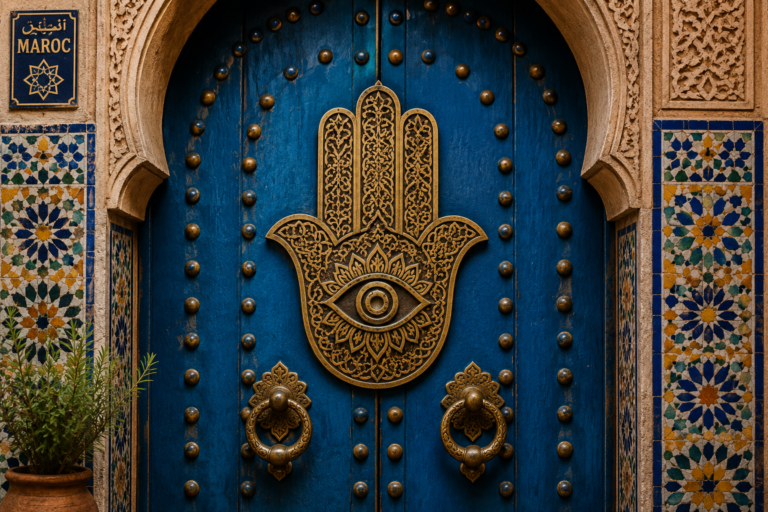
If you have ever wandered through the colorful streets of Morocco, you’ve probably noticed a beautiful hand-shaped symbol decorating ancient wooden doors, homes, jewelry, keychains, and traditional crafts. Known locally as Khmissa (also spelled Khamsa), this iconic symbol is one of Morocco’s most recognizable cultural emblems.
Often referred to as the Hand of Fatima, the Khmissa is believed to bring protection, blessings, peace, and good fortune. Whether carved into a traditional riad door in Marrakech or hanging in a Berber home in the Atlas Mountains, it remains an important part of Moroccan heritage.
What Does Khmissa Mean?
The word Khmissa comes from the Arabic word “Khamsa” (خمسة), meaning “five.” It refers to the five fingers of the hand.
In Morocco, the Khmissa is widely regarded as a protective symbol that helps guard against:
- The evil eye
- Envy and jealousy
- Negative energy
- Bad luck
For centuries, Moroccans have believed that displaying a Khmissa on homes or wearing it as jewelry can bring harmony, prosperity, and protection.
Why Is It Called the Hand of Fatima?
The symbol is also known as the Hand of Fatima, referring to Fatima al-Zahra, the daughter of the Prophet Muhammad.
In Islamic tradition, Fatima is admired for her:
- Patience
- Compassion
- Strength
- Faith
- Humility
Because of these virtues, many Muslims see the hand as a reminder of spiritual protection and moral values.
However, it’s important to note that the Khmissa is primarily a cultural symbol in Morocco rather than a religious obligation. Many Moroccans appreciate it as part of their heritage, while others simply enjoy its decorative beauty.
A Symbol Older Than Islam
Although many people associate the Hand of Fatima with Islam, historians believe the symbol existed long before Islam.
Ancient civilizations around the Mediterranean—including the Phoenicians and Carthaginians—used hand-shaped amulets as symbols of protection. Over time, the design became part of North African traditions and was embraced by Amazigh (Berber), Arab, Jewish, and later Islamic cultures.
Today, the Khmissa represents Morocco’s rich cultural diversity and long history.
The Khmissa in Moroccan Culture
In Morocco, the Khmissa is found almost everywhere.
It appears on:
- Traditional wooden doors
- Riads
- Mosques and old buildings
- Silver jewelry
- Necklaces
- Bracelets
- Carpets
- Pottery
- Leather bags
- Wedding decorations
- Handmade souvenirs
For many Moroccan families, placing a Khmissa above the entrance of a home symbolizes welcoming positive energy while protecting the household.
Why Is the Khmissa Placed on Moroccan Doors?
One of the most beautiful places to see the Khmissa is on Morocco’s traditional wooden doors.
Many historic doors feature:
- Brass Khmissa door knockers
- Hand-carved Khmissa designs
- Decorative metal engravings
- Geometric Amazigh patterns surrounding the symbol
The hand is traditionally believed to:
- Protect the home
- Bring blessings to the family
- Welcome guests with peace
- Keep away negative influences
This is why visitors often notice Khmissa door knockers in cities such as Marrakech, Fes, Essaouira, and Chefchaouen.
The Khmissa and the Evil Eye
Perhaps the best-known meaning of the Khmissa is its connection to the evil eye.
Across many Mediterranean and Middle Eastern cultures, people believe that envy or jealousy can bring misfortune.
The Khmissa is traditionally thought to help ward off this negative energy.
Many Moroccan Khmissas include a blue eye in the center of the palm, combining two protective symbols into one elegant design.
Khmissa in Amazigh (Berber) Culture
Among Amazigh communities, the Khmissa has long been incorporated into traditional jewelry and craftsmanship.
Silver Khmissa pendants are commonly worn during weddings and festivals, while artisans often engrave the symbol into:
- Silver fibulas
- Decorative boxes
- Carpets
- Pottery
- Leatherwork
Its use reflects a blend of protection, identity, and artistic tradition passed down through generations.
The Five Fingers: Different Interpretations
Although interpretations vary, many people associate the five fingers with values such as:
- Faith
- Patience
- Peace
- Love
- Protection
Others see the five fingers as a reminder of balance and harmony in everyday life.
These interpretations are cultural rather than universal, and meanings can differ between families and regions.
Can Tourists Buy a Khmissa in Morocco?
Absolutely!
The Khmissa is one of Morocco’s most popular handmade souvenirs. Visitors can find beautifully crafted versions in local markets, artisan workshops, and cooperatives.
Popular materials include:
- Sterling silver
- Brass
- Wood
- Ceramic
- Leather
- Hand-painted pottery
A handcrafted Khmissa makes a meaningful keepsake and a reminder of Morocco’s rich artistic heritage.
Where Can You See the Most Beautiful Khmissas?
If you’re traveling through Morocco, you’ll encounter stunning examples in:
- Marrakech – Ornate riad doors and artisan souks.
- Fes – Historic medina doors and traditional metalwork.
- Chefchaouen – Blue-painted streets with decorative door knockers.
- Essaouira – Wooden doors featuring handcrafted brass Khmissas.
- The Atlas Mountains – Amazigh villages showcasing traditional jewelry and handcrafted home décor.
These destinations are often included in tours offered by Sahara Desert Crew, allowing travelers to discover not only Morocco’s landscapes but also its fascinating cultural heritage.
Respecting Moroccan Traditions
While many visitors purchase the Khmissa as a beautiful souvenir, it’s worth remembering that the symbol holds cultural significance for many Moroccans. Appreciating its history and craftsmanship adds meaning to your visit and supports local artisans who continue these traditions.
Frequently Asked Questions
What is the Khmissa in Morocco?
The Khmissa, also called the Khamsa or Hand of Fatima, is a hand-shaped symbol widely associated with protection, blessings, and good fortune in Moroccan culture.
Is the Hand of Fatima religious?
The Hand of Fatima has religious associations in Islam, particularly through Fatima al-Zahra, but in Morocco it is also a cultural symbol used by many people regardless of personal beliefs.
Why do Moroccan doors have a Khmissa?
Many traditional Moroccan doors feature the Khmissa as a decorative element symbolizing protection, hospitality, and blessings for the home.
Is the Khmissa an Amazigh symbol?
The Khmissa has been adopted by many cultures across North Africa. It has long been incorporated into Amazigh artistic traditions alongside Arab, Jewish, and Mediterranean influences.