
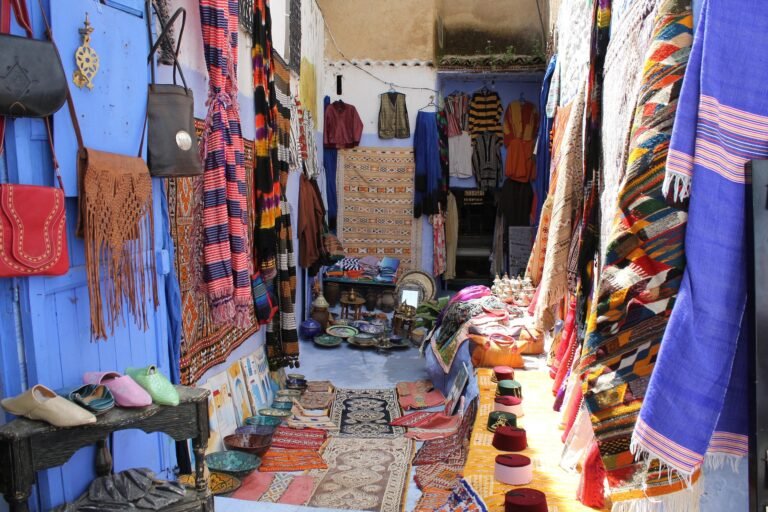
Moroccan Rugs: Discover the Art of Traditional Berber Carpets
Moroccan rugs are much more than decorative pieces. They are handmade works of art that reflect the history, culture and creativity of Morocco’s people. From the colourful geometric designs of the Atlas Mountains to the thick, natural wool rugs associated with the Middle Atlas, every carpet tells a story about the region where it was created.
For generations, Amazigh (Berber) communities have passed down traditional weaving techniques from mother to daughter. The colours, shapes and patterns often reflect local traditions, nature, family life and the weaver’s imagination.
Whether you are exploring the souks of Marrakech, visiting traditional villages in the Atlas Mountains or travelling through southern Morocco, discovering Moroccan carpets is a wonderful way to learn more about the country’s cultural heritage.
With Sahara Desert Crew Tours & Adventures, you can also arrange optional visits to local carpet cooperatives during your Morocco trip, offering an opportunity to discover traditional weaving and meet the artisans behind these beautiful creations.
1. The History of Moroccan Carpets
The tradition of carpet weaving in Morocco goes back centuries. Before rugs became popular decorative items in homes around the world, they served practical purposes in everyday life.
In mountain villages and rural communities, carpets provided warmth during cold winters, covered floors, decorated homes and were sometimes used as blankets or bedding. Their thick wool was particularly valuable in the Atlas Mountains, where temperatures can drop considerably during winter.
Amazigh communities developed their own weaving styles, designs and techniques according to local materials, climate and traditions. Wool from sheep was widely used, while natural dyes were traditionally obtained from plants, minerals and other local sources.
Over time, Moroccan rugs became recognised internationally for their distinctive patterns, rich textures and handmade character. Although modern production methods and synthetic dyes are now also used, many artisans continue to preserve traditional techniques.
2. Amazigh Carpet Weaving: A Tradition Passed Down Through Generations
Carpet weaving is an important part of Amazigh cultural heritage. In many communities, women have traditionally played a central role in producing rugs, learning the craft from older members of their families.
The process requires patience and skill. Artisans prepare the wool, select colours, plan patterns and weave the fibres together using traditional looms. Depending on the design, size and technique, completing a single carpet can take weeks or even months.
Traditional patterns often feature diamonds, zigzags, lines and other geometric shapes. Their meanings vary between communities and individual weavers, so it is best not to assume that every symbol has one universal interpretation.
Each handmade rug is different. Small variations in colour, shape and texture are part of its character and reflect the human hands behind the work.
3. The Different Types of Moroccan Rugs by Region
Morocco has a rich variety of carpet-making traditions. Each region has its own styles, colours, materials and weaving techniques.
Middle Atlas Mountains: Beni Ourain and Beni M’Guild Rugs
The Middle Atlas is famous for its traditional Amazigh rugs, particularly those associated with Beni Ourain and Beni M’Guild communities.
Beni Ourain rugs are known for their thick, soft wool and simple geometric patterns, often featuring dark lines on a cream or ivory background. Their understated appearance makes them popular in contemporary interiors.
Beni M’Guild rugs are traditionally associated with deeper colours, including red, burgundy, orange and purple, although styles vary. Many have a dense pile that provides warmth in colder mountain climates.
These carpets demonstrate how local conditions and cultural traditions influence the design of handmade textiles.
High Atlas Mountains: Colourful Amazigh Designs
The High Atlas Mountains are home to many weaving communities with distinctive regional styles. Rugs from this area may feature bold geometric patterns, contrasting colours and intricate compositions.
Some are known for bright reds, oranges, yellows and blues, while others use more muted tones. Their designs can reflect the weaver’s creativity and the traditions of the local community.
A visit to an Atlas village can offer a deeper understanding of the people and lifestyles connected to this craft.
Taznakht: A Famous Carpet-Weaving Centre
Located in southern Morocco, Taznakht is well known for its carpet-making heritage. The surrounding area has a long tradition of weaving, with artisans producing colourful rugs using detailed patterns and traditional techniques.
Taznakht carpets are often associated with rich colours and elaborate designs. Depending on the rug, the patterns may include geometric shapes and decorative motifs influenced by local Amazigh traditions.
For travellers exploring southern Morocco, the area offers an interesting opportunity to learn about regional craftsmanship beyond the country’s better-known cities.
Marrakech: A Meeting Place for Moroccan Carpets
Marrakech is one of Morocco’s most famous destinations for shopping for traditional carpets. Its medina and souks bring together rugs from different regions, making the city a useful place to compare styles.
Visitors can find Beni Ourain rugs, colourful Atlas designs, vintage carpets and more contemporary interpretations of traditional patterns.
However, a carpet sold in Marrakech may have been made in a completely different part of Morocco. If you want to know where a rug comes from, ask the seller about its region, materials and production method.
Rabat: Elegant Urban Carpets
Rabat has its own carpet tradition, often associated with more formal, carefully arranged designs. Traditional urban carpets can feature floral motifs, decorative borders and balanced compositions.
Compared with some rural Amazigh rugs, which often emphasise bold geometric forms, traditional Rabat carpets may have a more structured appearance. Both styles are part of Morocco’s diverse textile heritage.
Fes and Meknes: Traditional Craftsmanship
Fes and Meknes are known for their historic medinas and wider traditions of Moroccan craftsmanship. In these cities, visitors may encounter carpets and textiles from several parts of the country.
Fes is especially associated with traditional artisanal production, while Meknes and the surrounding areas have connections to regional weaving traditions, including those of the Zemmour area.
Shopping in these cities can be a good opportunity to explore the relationship between Moroccan craft, trade and everyday life.
Chefchaouen and the Rif Mountains
Chefchaouen is famous for its blue-painted streets and mountain scenery, but the wider Rif region also has its own textile and craft traditions.
The designs and materials found in this area can differ from those of the Middle and High Atlas. Travellers interested in Moroccan handicrafts should look beyond the most famous carpet-producing regions to discover the variety of local traditions.
Taroudant and the Souss Region
Taroudant, sometimes called a smaller or quieter alternative to Marrakech, offers an introduction to the culture and craftsmanship of southern Morocco.
The wider Souss region has strong Amazigh cultural traditions, and travellers may find local textiles and handmade crafts alongside argan products and other regional goods.
A visit to Taroudant can combine exploration of the historic ramparts and traditional souks with an opportunity to discover local artisans.
Ouarzazate and Southern Morocco
Ouarzazate is an important stop on many journeys through southern Morocco. The surrounding region is connected to traditional crafts, including carpet weaving in areas such as Taznakht.
Travellers passing through Ouarzazate towards the Dades Valley, Todra Gorge or Merzouga can discover more about the region’s cultural heritage along the way.
The Sahara and Eastern Morocco
In desert and oasis communities, local crafts reflect different lifestyles, materials and cultural influences. Although not every desert community specialises in carpet weaving, visitors may encounter woven textiles and handmade products that express the heritage of southern and eastern Morocco.
If you are travelling towards Merzouga and the Erg Chebbi dunes, exploring local culture alongside the desert landscape can make the journey more meaningful.
4. The Patterns and Colours of Moroccan Rugs
One of the most distinctive features of Moroccan rugs is their variety of patterns and colours.
Geometric shapes such as diamonds, zigzags, crosses and parallel lines appear in many traditional designs. Their meanings can differ according to the region, the weaving tradition and the individual artisan.
Colours also vary widely. Natural wool shades, such as cream, brown and grey, are common in some rugs, while others use strong reds, oranges, yellows, blues and greens.
Traditionally, artisans used natural dyes made from locally available materials. Today, both natural and synthetic dyes are used, depending on the producer and the style of carpet.
When buying a rug, ask the artisan or seller about the design and the dyes used. Hearing the story behind a particular piece can make it more special than simply choosing a carpet based on its colour.
5. How Are Traditional Moroccan Rugs Made?
Making a handmade Moroccan rug involves several stages.
Preparing the wool: Wool is cleaned and prepared before it is spun into yarn. The quality and texture of the wool influence the finished rug.
Dyeing the yarn: The yarn may be left in its natural colour or dyed using natural or synthetic dyes.
Preparing the loom: The artisan sets up the threads and prepares the loom according to the intended design and dimensions.
Weaving the carpet: The weaver works row by row, creating the pattern by hand. Some designs are simple and minimalist, while others require considerable detail.
Finishing the rug: Once weaving is complete, the carpet is removed from the loom, trimmed and finished. It may then be cleaned and prepared for sale.
The time required depends on the rug’s size, thickness, complexity and weaving technique. This is one reason why handmade carpets can vary considerably in price.
6. Visit Moroccan Carpet Cooperatives
For travellers who want to go beyond sightseeing, discovering Moroccan carpet weaving can be a memorable cultural experience.
Sahara Desert Crew Tours & Adventures can arrange optional visits to local carpet cooperatives during your Morocco tour. These visits can provide an opportunity to meet artisans, observe traditional weaving techniques and learn how handmade rugs are produced.
Depending on your itinerary and the locations available, you may discover how wool is prepared, how patterns are woven and how different regional traditions influence the finished carpets. You can also ask questions about the materials, colours and designs while learning more about the craft from the people who practise it.
Optional cooperative visits may be considered during journeys that pass through suitable areas of the Atlas Mountains or southern Morocco. The exact possibilities depend on your route, timing and local availability.
These visits are optional, so you can decide whether to include them in your trip. If you are interested in Moroccan handicrafts, we can help you plan a journey that combines the country’s landscapes, historic cities and cultural experiences.
Our tours focus on discovering Morocco through its people, traditions and places—not just travelling between destinations.
Planning a trip to Morocco? Contact Sahara Desert Crew Tours & Adventures to discuss your itinerary and ask about including an optional visit to a local carpet cooperative.
Website: https://sahara-desert-crew.com/
7. Tips for Buying an Authentic Moroccan Rug
Buying a Moroccan rug can be a wonderful way to bring home a piece of the country’s craftsmanship. Before making a purchase, keep the following points in mind.
Ask about its origin. Find out which region or community the rug comes from. A knowledgeable seller should be able to explain its style and background.
Check the materials. Ask whether the rug is made from wool, cotton or a mixture of fibres. If natural wool is important to you, confirm the composition rather than relying only on appearance.
Look at the weaving. Handmade rugs often show small variations. Examine the knots, pile, edges and back of the carpet to understand how it has been made.
Understand the colours and dyes. Ask whether the dyes are natural or synthetic if this matters to you.
Compare prices. Prices depend on size, materials, weaving technique, condition and the time required to produce the rug. Comparing similar pieces can help you make a more informed decision.
Take your time. You do not need to buy the first carpet you see. Explore different styles, ask questions and choose a piece you genuinely like.
Consider the practical details. If you are travelling internationally, ask about packing, shipping costs, delivery times and any customs requirements that may apply.
8. Where Can You See and Buy Moroccan Rugs?
There are several places where travellers can discover Moroccan carpets.
- Marrakech: The medina and traditional souks offer a wide variety of carpet styles from different regions.
- Fes: Explore the city’s historic artisan traditions and shops selling Moroccan textiles and crafts.
- Rabat: Discover traditional urban carpet styles and other local handicrafts.
- The Atlas Mountains: Depending on the area and local availability, you may have opportunities to learn about Amazigh weaving traditions.
- Taznakht and the Ouarzazate region: Explore areas associated with southern Morocco’s carpet-making heritage.
- Local carpet cooperatives: Where visits are available, cooperatives can offer an opportunity to meet artisans and learn about the weaving process.
When visiting a cooperative or workshop, remember that each place operates differently. Some focus on producing carpets, while others also welcome visitors and sell their work directly.
If a cooperative visit is important to you, it is best to arrange it in advance rather than assume that every workshop is open to tourists.
9. Discover Moroccan Craftsmanship on Your Morocco Tour
Morocco offers far more than beautiful landscapes and historic monuments. Its traditional crafts provide a window into the country’s regional identities, family traditions and everyday life.
From the colourful souks of Marrakech to the villages of the Atlas Mountains and the landscapes of southern Morocco, each journey offers different ways to discover the country’s cultural heritage.
With Sahara Desert Crew Tours & Adventures, you can organise a private or small-group journey tailored to your interests. Alongside destinations such as Marrakech, Ouarzazate, the Dades Valley, Merzouga and the Sahara Desert, you can ask about optional cultural experiences, including visits to local carpet cooperatives where available.
Whether you are interested in handmade rugs, traditional markets, Amazigh culture or desert life, we can help you plan a journey that combines Morocco’s famous highlights with opportunities to discover its local traditions.
Explore our tours: https://sahara-desert-crew.com/
Frequently Asked Questions About Moroccan Rugs
What are Moroccan rugs made from?
Many traditional Moroccan rugs are made from wool, although cotton and other fibres may also be used. Materials vary according to the region, rug style and producer.
What is a Beni Ourain rug?
A Beni Ourain rug is a traditional Amazigh rug associated with communities in Morocco’s Middle Atlas region. It is especially known for its thick wool and often simple geometric designs on a light background.
Which Moroccan region is famous for carpet weaving?
Several regions have important carpet-weaving traditions, including the Middle Atlas, High Atlas and Taznakht area in southern Morocco. Each has distinctive styles and designs.
Are all Moroccan rugs handmade?
No. Morocco offers both handmade and machine-made rugs. If you want a handmade piece, ask the seller about its production method and examine the rug carefully.
Can I visit a Moroccan carpet cooperative during my trip?
Yes, an optional visit may be possible depending on your itinerary and local availability. Sahara Desert Crew Tours & Adventures can help arrange visits to suitable local carpet cooperatives where available. Contact us in advance to discuss the possibilities for your route.
Can I buy a Moroccan rug during a cooperative visit?
Some cooperatives and workshops sell carpets directly, but arrangements vary by location. Ask in advance whether buying is possible and whether international shipping is available.
How much does a Moroccan rug cost?
Prices vary depending on the rug’s size, materials, weaving technique, age, condition and the time needed to make it. Comparing similar rugs and asking questions about their origin can help you judge the value.
Conclusion: A Piece of Moroccan Heritage
Moroccan rugs are a beautiful expression of the country’s cultural diversity and artisanal heritage. From the natural wool of Beni Ourain carpets to the colourful patterns of southern Morocco, each style reflects the creativity and traditions of the people who make it.
Discovering these rugs is not only about shopping. It is also an opportunity to learn about regional identities, traditional skills and the generations of artisans who have kept this craft alive.
If you are planning to explore Morocco, Sahara Desert Crew Tours & Adventures can help you combine your journey with optional visits to local carpet cooperatives, where available, so you can learn more about traditional weaving and the people behind these remarkable creations.
Explore Morocco with us: https://sahara-desert-crew.com/