
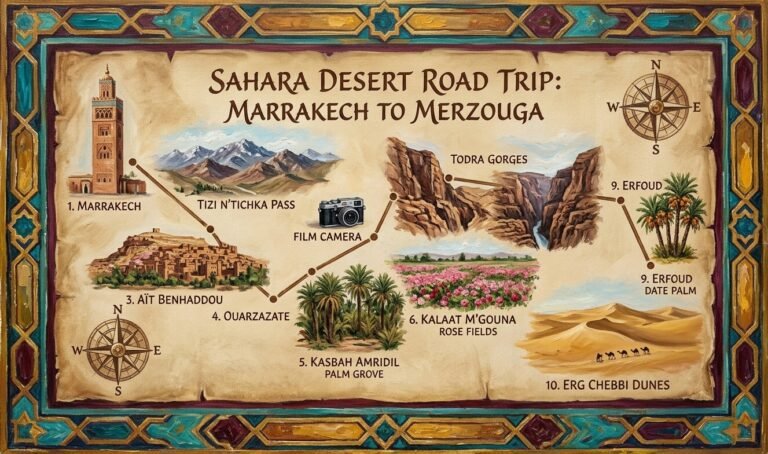
What to See Between Marrakech and Merzouga: The Best Stops on a Sahara Desert Road Trip
A journey from Marrakech to Merzouga is much more than a drive to the Sahara Desert. Along the way, you will cross the High Atlas Mountains, discover traditional mud-brick villages, explore dramatic valleys and gorges, and watch the landscape gradually change from green mountain scenery to the dry, open terrain of southern Morocco.
For many travellers, reaching the golden dunes of Erg Chebbi is the highlight of the journey. But the places you visit along the way can become just as memorable.
If you are planning a Marrakech to Merzouga desert tour, here are the best stops to include on your road trip, along with practical tips for choosing the right itinerary.
1. Cross the High Atlas Mountains
Your journey usually begins in Marrakech, where the busy streets and red-coloured buildings soon give way to winding mountain roads.
The High Atlas Mountains offer some of the most beautiful scenery in Morocco. As you travel through the mountains, you will see rocky peaks, deep valleys, terraced fields and small Amazigh (Berber) villages built into the hillsides.
One of the best-known mountain crossings is the Tizi n’Tichka Pass. The road reaches high elevations and offers panoramic views across the surrounding landscape.
There are several places to stop for photographs, although the number of stops will depend on traffic, weather and your schedule.
Travel tip: If you enjoy photography and mountain scenery, choose a private tour when possible. It can give you greater flexibility to stop at suitable viewpoints without feeling rushed.
2. Explore Aït Ben Haddou, a Historic Fortified Village
Aït Ben Haddou is one of the most famous places to visit between Marrakech and Merzouga. This historic fortified settlement, known as a ksar, is recognised as a UNESCO World Heritage Site.
Its earthen buildings, defensive walls and towers rise above the surrounding landscape, creating a striking view that feels very different from Marrakech.
Walking through the narrow paths between the old buildings is an opportunity to appreciate traditional southern Moroccan architecture and learn about the settlement’s history. From higher viewpoints, you can enjoy wide views over the village and the nearby river valley.
Aït Ben Haddou has also appeared in various film and television productions, which has helped make it a popular stop for international visitors.
Allow enough time to explore rather than simply taking a photograph from the roadside. If you are interested in history, a local guide can help explain the architecture and the importance of the settlement.
Aït Ben Haddou is particularly worthwhile if you are travelling to the Sahara for the first time.
3. Discover Ouarzazate, the Gateway to the Desert
After visiting Aït Ben Haddou, many desert itineraries continue towards Ouarzazate.
Often called the Gateway to the Sahara, Ouarzazate is known for its film industry, historic kasbahs and location at the meeting point of several southern Moroccan routes.
Depending on your interests and available time, you can explore Kasbah Taourirt, visit a film studio or stop for lunch before continuing your journey.
Ouarzazate is also a useful place to learn more about the landscapes of southern Morocco. The surrounding area combines rocky plateaus, mountain scenery, palm groves and traditional settlements.
If you are taking a three-day desert tour, your time here may be limited. A four-day itinerary or a longer private trip can offer more opportunities to explore the region.
4. Visit the Skoura Oasis and Kasbah Amridil
As you travel east from Ouarzazate, the scenery changes again. The Skoura Oasis is known for its extensive palm groves and traditional kasbahs.
One of the best-known landmarks in the area is Kasbah Amridil, an impressive example of traditional earthen architecture. Its towers, courtyards and decorative details offer a glimpse into the architectural heritage of southern Morocco.
The oasis itself provides a striking contrast to the dry landscapes surrounding it. Palm trees grow alongside agricultural plots, reflecting the importance of water and farming to communities in this region.
Not every Marrakech to Merzouga tour includes a detailed visit to Skoura, so ask your tour operator whether there is enough time to stop.
For travellers interested in Moroccan history, architecture and everyday rural life, this can be a rewarding addition to the journey.
5. Travel Through the Valley of Roses
The Valley of Roses, around the Kalaat M’Gouna area, is another interesting stop on the route through southern Morocco.
The region is known for its rose cultivation and products made from roses, including rose water, soaps and cosmetics. During the flowering season, the landscape can be especially attractive, although the experience varies depending on the time of year and local conditions.
If you stop at a local shop or cooperative, you may learn how rose products are prepared and processed.
The valley is also part of the broader landscape often associated with Morocco’s historic kasbah routes. Along the road, you can see villages, cultivated fields, mountains and traditional buildings.
Rather than treating this as just another roadside stop, take a little time to appreciate how people live and work in this part of Morocco.
6. Spend Time in the Dades Valley
The Dades Valley is one of the most scenic places to visit on a Marrakech to Merzouga road trip.
Known for its dramatic rock formations, winding roads and traditional settlements, the valley offers a very different landscape from the high sand dunes that await you in Merzouga.
One popular area is the Dades Gorges, where the road follows the valley between steep rock walls. The surrounding scenery changes in colour throughout the day, making it a favourite stop for photographers.
You can also find viewpoints overlooking the valley and interesting rock formations, including those commonly known as the “Monkey Fingers” or “Monkey Toes.”
Many travellers spend the night in the Dades Valley before continuing towards Merzouga the following day. This break helps divide the journey and gives you more time to appreciate the landscape.
If you want to enjoy the road trip rather than spend most of the day driving, an overnight stop in Dades is worth considering.
7. Walk Through the Todra Gorges
The Todra Gorges, near Tinghir, are another highlight of southern Morocco.
Here, the river has carved a dramatic passage through towering rock walls. The gorge is a popular stop for travellers, walkers and photographers who want to experience one of the region’s most impressive natural landscapes.
You can usually spend some time walking through an accessible section of the gorge, taking photographs and enjoying the cooler atmosphere near the river.
Depending on your itinerary, you may visit Todra Gorges on the way to Merzouga or during a longer journey through the region.
If you enjoy walking, allow enough time to explore at a comfortable pace. The experience is more rewarding when you are not rushing to reach the next destination.
8. Discover Traditional Fossil Workshops Around Erfoud
As you travel farther east towards Merzouga, you may pass through Erfoud, a town known for its connections to the fossil-rich landscapes of the region.
Some local workshops display fossils and stone products, offering visitors an opportunity to learn about the area’s geological heritage.
You may see polished stone pieces, decorative objects and examples of fossils discovered in the wider region. If this interests you, ask your guide about visiting a workshop where the production process can be explained.
Not every traveller needs to make this stop, but it can be a good addition for families, geology enthusiasts and anyone curious about the natural history of southern Morocco.
If you decide to buy a fossil or stone product, ask about its origin and whether it is a genuine local specimen or a manufactured decorative item.
9. Finally, Arrive at the Erg Chebbi Dunes in Merzouga
After travelling through mountains, valleys, kasbahs and rocky desert landscapes, you will eventually reach Merzouga, the gateway to the spectacular Erg Chebbi dunes.
The scenery changes dramatically here. Golden sand rises into large dunes, and the open landscape creates a sense of space that is difficult to experience in Morocco’s cities.
Depending on your plans, you can explore the dunes by camel, enjoy a 4×4 excursion, try sandboarding or simply watch the changing colours of the sand at sunset.
Many visitors choose to spend a night in a desert camp. An evening may include a traditional Moroccan dinner, music around the campfire and time to enjoy the desert sky.
If you prefer not to ride a camel, ask whether your chosen camp offers a 4×4 transfer or another suitable way to reach it.
For more ideas, read our guide to things to do in Merzouga besides camel trekking, and link this text to the published article’s exact URL once it is available.
How Many Days Do You Need for a Marrakech to Merzouga Tour?
The right duration depends on how much time you have and whether you want to explore the places along the way or focus mainly on reaching the Sahara.
Three-day Marrakech to Merzouga tour
A three-day tour is a popular choice for travellers with limited time. It usually includes the High Atlas Mountains, Aït Ben Haddou, a night in the Dades Valley, and an overnight desert camp near Merzouga before returning to Marrakech.
The main advantage is that you can experience the Sahara within a shorter holiday. The disadvantage is that the days involve substantial driving, leaving less time for some stops.
Four-day Marrakech to Merzouga tour
A four-day itinerary allows a more relaxed pace, depending on the route and accommodation arrangements. You may have more time for sightseeing, photography, local visits and enjoying the journey.
If you prefer to experience southern Morocco rather than simply pass through it, the extra day can make a noticeable difference.
Private Marrakech to Merzouga tour
A private tour can be a good option for couples, families and small groups who want greater flexibility. You can discuss the stops that matter most to you, the accommodation style and the pace of the journey.
However, the route and travel time still matter. Even on a private trip, it is best to avoid adding too many stops to a short itinerary.
Explore our Marrakech desert tours to compare possible routes and find an option that suits your plans.
What Is the Best Time for a Marrakech to Merzouga Road Trip?
Spring and autumn are popular seasons for travelling through southern Morocco because daytime temperatures are often more comfortable for sightseeing and outdoor activities.
March to May and September to November can be good periods to consider, although conditions vary from year to year.
Winter can offer pleasant daytime weather, but nights in the mountains and desert can be cold. Summer brings high temperatures, especially around the desert, so it is important to stay hydrated and plan outdoor activities carefully.
Whatever season you choose, bring comfortable walking shoes, sun protection, water and layers for cooler evenings.
Practical Tips for Your Marrakech to Merzouga Journey
Before booking your trip, keep a few points in mind:
- Choose the right duration. Three days can work if you have limited time, while four days or longer gives you more room to explore.
- Ask what is included. Check whether accommodation, meals, desert camp transfers, entrance fees and activities are included in the quoted price.
- Allow time for stops. A road trip is more enjoyable when you have time to appreciate the scenery instead of rushing from one place to another.
- Consider your accommodation preferences. You can ask about standard hotels, traditional guesthouses and desert camps with different comfort levels.
- Plan around your interests. History lovers may prefer more time at kasbahs, while photographers may want additional stops at viewpoints.
- Keep some flexibility. Road conditions, weather and local circumstances can affect the timing of your journey.
Explore Morocco with Sahara Desert Crew Tours & Adventures
The journey from Marrakech to Merzouga brings together many of the things that make Morocco special: mountain landscapes, historic villages, traditional architecture, dramatic valleys and the vast Sahara Desert.
At Sahara Desert Crew Tours & Adventures, we organise Morocco trips for travellers who want to experience the country at a comfortable pace while discovering its landscapes and local culture.
Whether you are considering a three-day desert tour, a four-day journey or a longer private itinerary, you can discuss your preferred stops, accommodation and activities with our team.
Visit our Marrakech desert tours page to explore available options, or contact us to plan a trip that fits your schedule and interests.
The Sahara is the destination, but the journey through southern Morocco is an adventure in its own right.
Frequently Asked Questions
Is the drive from Marrakech to Merzouga worth it?
Yes, especially if you enjoy varied landscapes and cultural stops. The journey crosses the High Atlas Mountains and can include historic kasbahs, valleys and gorges before reaching the Erg Chebbi dunes.
What are the best stops between Marrakech and Merzouga?
Popular stops include Tizi n’Tichka Pass, Aït Ben Haddou, Ouarzazate, Skoura Oasis, the Valley of Roses, Dades Valley and Todra Gorges. The stops included depend on your itinerary and available time.
Is three days enough for Marrakech to Merzouga?
Three days is enough for a classic desert itinerary, but it involves substantial driving. If you want more time for sightseeing and local experiences, consider a four-day trip or a longer tour.
Can I travel from Marrakech to Merzouga without riding a camel?
Yes. You can explore the dunes on foot in suitable areas, book a 4×4 excursion and ask whether your desert camp offers an alternative transfer to a camel ride.
Should I choose a private or shared desert tour?
A private tour generally offers more flexibility over stops and pace, while a shared tour can be a more economical option. Compare the itinerary, group size, accommodation and inclusions before deciding.
Where should I spend the night on the way to Merzouga?
Many itineraries include an overnight stay in the Dades Valley or nearby area before continuing to Merzouga. This helps break up the drive and gives you more time to explore southern Morocco.