
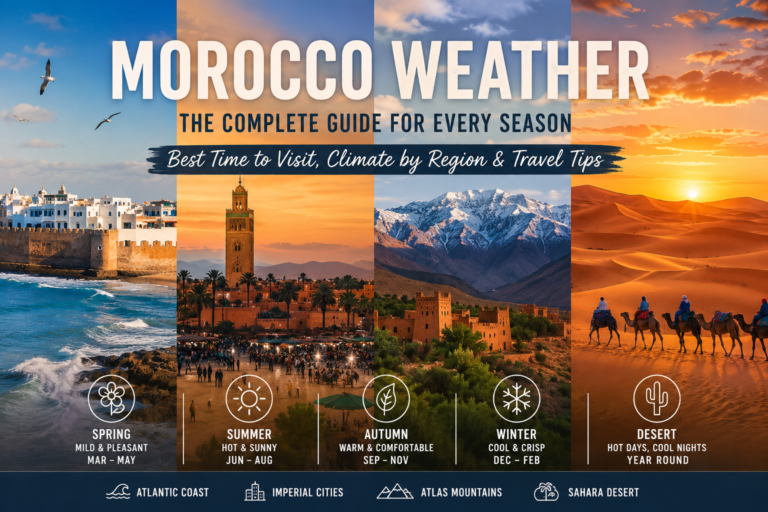
Morocco weather: Morocco is one of the few countries where you can experience snow-covered mountains, sunny beaches, lush valleys, and the Sahara Desert in a single trip. This incredible variety makes Morocco a year-round destination, but it also means the weather changes dramatically depending on where and when you travel.
Unlike many destinations with a uniform climate, Morocco offers several distinct weather zones. While Marrakech may be enjoying warm sunshine, the Atlas Mountains could be covered in snow, and the Sahara Desert may experience freezing nights despite hot daytime temperatures.
Whether you’re planning a desert adventure, a cultural tour of the Imperial Cities, or a relaxing stay on the Atlantic coast, understanding Morocco’s weather will help you pack wisely and choose the best time to travel.
In this complete guide, you’ll discover Morocco’s climate, monthly weather, regional differences, seasonal highlights, and practical travel tips.
Understanding Morocco’s Climate
Morocco sits in northwest Africa, bordered by both the Atlantic Ocean and the Mediterranean Sea. Its geography creates several climate zones that make the country unique.
The main climate regions include:
- Mediterranean climate in the north
- Atlantic climate along the western coast
- Continental climate in the inland cities
- Alpine climate in the Atlas Mountains
- Desert climate in southern Morocco and the Sahara
This means temperatures can vary by more than 30°C (54°F) between two destinations on the same day.
Morocco Weather by Region
Atlantic Coast
Cities include:
- Casablanca
- Rabat
- Essaouira
- El Jadida
- Agadir
The Atlantic Ocean keeps temperatures comfortable throughout the year.
Summer
Summer is warm rather than extremely hot.
Average temperatures:
- 22–30°C (72–86°F)
The ocean breeze makes cities like Essaouira particularly pleasant even in July and August.
Winter
Winter remains mild.
Average temperatures:
- 10–20°C (50–68°F)
Snow is extremely rare on the coast.
The Atlantic coast is one of the best choices for travelers looking to escape extreme summer heat.
Imperial Cities
The famous Imperial Cities include:
- Marrakech
- Fes
- Meknes
- Rabat
These cities experience more extreme seasonal changes.
Summer
From June to August, temperatures frequently exceed:
35°C (95°F)
During heat waves they may reach:
42–47°C (108–117°F)
Fortunately, mornings and evenings remain much more comfortable.
Winter
Winter days are generally pleasant:
15–22°C (59–72°F)
However, nights can become surprisingly cold.
Temperatures occasionally drop close to freezing, especially in January.
Sahara Desert Weather
The Sahara Desert offers one of Morocco’s most dramatic climates.
Popular desert destinations include:
- Merzouga
- Erg Chebbi
- Zagora
- Erg Chigaga
Many visitors expect constant heat, but the desert changes dramatically between day and night.
Spring
Spring is one of the best seasons.
Average daytime temperatures:
22–32°C (72–90°F)
Evenings remain comfortable.
Summer
Summer is extremely hot.
Daytime temperatures often exceed:
45°C (113°F)
Some afternoons approach 50°C (122°F).
Outdoor activities are usually planned during sunrise or sunset.
Autumn
Autumn brings pleasant weather.
Average temperatures:
24–34°C (75–93°F)
This is considered one of the best times for camel trekking and desert camping.
Winter
Winter surprises many travelers.
Sunny afternoons:
18–24°C (64–75°F)
Night temperatures:
0–5°C (32–41°F)
Occasionally they fall below freezing.
Luxury desert camps provide warm blankets, but visitors should bring a winter jacket.
Atlas Mountains Weather
The Atlas Mountains create an entirely different climate.
Popular areas include:
- Imlil
- Oukaimeden
- Midelt
- Azilal
- Dades Valley
- Todra Gorge
Winter often brings heavy snowfall.
Some mountain passes temporarily close after snowstorms.
Meanwhile, summer offers pleasant hiking temperatures between:
18–28°C (64–82°F)
Mountain weather changes quickly, so travelers should always carry extra layers.
Northern Morocco Weather
Northern Morocco enjoys a Mediterranean climate.
Popular destinations include:
- Tangier
- Chefchaouen
- Tetouan
- Al Hoceima
Characteristics include:
- Warm summers
- Mild winters
- More rainfall than southern Morocco
- Green landscapes
This region becomes especially beautiful during spring.
Morocco Weather by Season
Spring (March to May)
Spring is often considered the best season to visit Morocco.
Average temperatures:
18–30°C (64–86°F)
Why visit?
- Blooming flowers
- Comfortable temperatures
- Green valleys
- Excellent hiking
- Ideal desert weather
- Pleasant city sightseeing
This season is perfect for almost every itinerary.
Summer (June to August)
Summer is Morocco’s hottest season.
Coastal cities remain pleasant.
Interior cities become very hot.
The Sahara experiences extreme temperatures.
Travel tips:
- Start sightseeing early.
- Drink plenty of water.
- Wear sunscreen.
- Stay in shaded areas during the afternoon.
- Book accommodation with air conditioning.
Autumn (September to November)
Autumn is another excellent season.
Summer heat gradually decreases.
Average temperatures:
20–32°C (68–90°F)
This season offers:
- Comfortable cities
- Beautiful sunsets
- Ideal desert camping
- Great photography conditions
Many tour companies consider autumn their busiest season.
Winter (December to February)
Winter offers a unique combination.
In one trip you can experience:
- Snow in the Atlas Mountains
- Sunshine in Marrakech
- Mild weather in Agadir
- Cold nights in the Sahara
Winter is an excellent choice for travelers seeking fewer crowds.
Morocco Weather by Month
January
- Coolest month
- Snow in the Atlas Mountains
- Cold desert nights
- Pleasant coastal weather
February
- Similar to January
- Almond trees begin blooming
- Excellent hiking in southern regions
March
- Start of spring
- Comfortable temperatures
- Ideal for road trips
April
One of Morocco’s most beautiful months.
Expect:
- Green valleys
- Wildflowers
- Pleasant desert weather
May
Warm without excessive heat.
Excellent for:
- Imperial Cities
- Sahara
- Mountains
- Atlantic Coast
June
Summer begins.
Temperatures rise quickly inland.
The coast remains comfortable.
July
Very hot inland.
Excellent beach weather.
Desert tours are still possible but require careful planning.
August
Usually Morocco’s hottest month.
Best destinations:
- Essaouira
- Agadir
- Atlantic Coast
September
Heat gradually decreases.
Excellent month for desert tours.
October
One of the most popular travel months.
Perfect weather almost everywhere.
November
Cool mornings.
Warm afternoons.
Excellent sightseeing.
December
Pleasant winter sunshine.
Snow returns to the Atlas Mountains.
Desert nights become cold.
Rainfall in Morocco
Rainfall varies greatly.
Northern Morocco receives the highest rainfall.
Southern Morocco remains dry throughout most of the year.
The Sahara Desert may go months without significant rain.
The wettest months are generally:
- November
- December
- January
Even then, rain rarely lasts all day.
Snow in Morocco
Many visitors are surprised to learn Morocco has ski resorts.
Snow regularly falls in:
- Oukaimeden
- Ifrane
- Michlifen
- High Atlas Mountains
It is possible to ski in the morning and enjoy warm sunshine in Marrakech the same afternoon.
Sandstorms in the Sahara
Sandstorms occasionally occur, mainly during spring.
Professional guides monitor weather forecasts carefully.
If conditions become unsafe, itineraries may be adjusted.
These events are relatively uncommon and usually short-lived.
Best Time to Visit Morocco
The answer depends on your interests.
For sightseeing
March–May
September–November
For the Sahara Desert
October–April
For hiking
April–June
September–October
For beaches
June–September
For surfing
September–April
For skiing
January–February
What to Pack for Morocco
Packing depends on the season, but some essentials include:
- Comfortable walking shoes
- Sunglasses
- Sunscreen
- Hat
- Reusable water bottle
- Light clothing
- Warm jacket for evenings
- Scarf for desert wind
- Power adapter (Type C & E)
Even in summer, pack a light sweater for cool evenings in the mountains or desert.
Weather Tips for Desert Tours
If you’re joining a Sahara Desert tour:
- Dress in layers.
- Bring a warm jacket for winter nights.
- Wear breathable clothing during the day.
- Use sunscreen and lip balm.
- Protect cameras from sand.
- Stay hydrated.
- Wear closed shoes for walking on dunes.
The desert climate changes quickly after sunset.
Why Morocco Has Such Diverse Weather
Few countries offer such dramatic climate diversity.
Within a single itinerary, you can travel from Atlantic beaches to cedar forests, snowy mountains, lush valleys, palm oases, rocky canyons, and the vast Sahara Desert.
This incredible variety is one of Morocco’s greatest attractions and allows visitors to enjoy unique experiences throughout the year.
Discover Morocco in Every Season with Sahara Desert Crew
No matter when you visit, Morocco offers unforgettable landscapes and experiences. From spring wildflowers in the Atlas Mountains to golden sunsets over the Sahara and refreshing Atlantic breezes in Essaouira, every season has its own charm.
At Sahara Desert Crew, we organize private and shared tours throughout the year, carefully planning each itinerary according to seasonal weather conditions. Whether you’re dreaming of a camel trek across the dunes, exploring ancient medinas, hiking mountain trails, or relaxing by the coast, our local team will help you experience Morocco at its best.
Browse our Morocco tours and let us help you choose the perfect itinerary for the season of your visit.
Frequently Asked Questions
What is the best month to visit Morocco?
April, May, September, and October are widely considered the best months because they offer pleasant temperatures across most of the country.
Is Morocco hot all year?
No. While summers can be very hot inland and in the Sahara, winters are cool, especially at night. The Atlas Mountains often receive snow, and coastal cities enjoy mild temperatures year-round.
Does it snow in Morocco?
Yes. Snow falls regularly in the Atlas Mountains and around Ifrane during winter, making Morocco one of the few African countries with ski resorts.
How hot is the Sahara Desert in summer?
Daytime temperatures often exceed 45°C (113°F) and can approach 50°C (122°F) during heat waves. Desert tours are usually scheduled early in the morning and late in the afternoon to avoid the hottest hours.
Is winter a good time to visit Morocco?
Absolutely. Winter is an excellent season for sightseeing, visiting the Sahara Desert, and exploring the Imperial Cities. Just be prepared for cold nights in the desert and mountains.